What is a serious game?
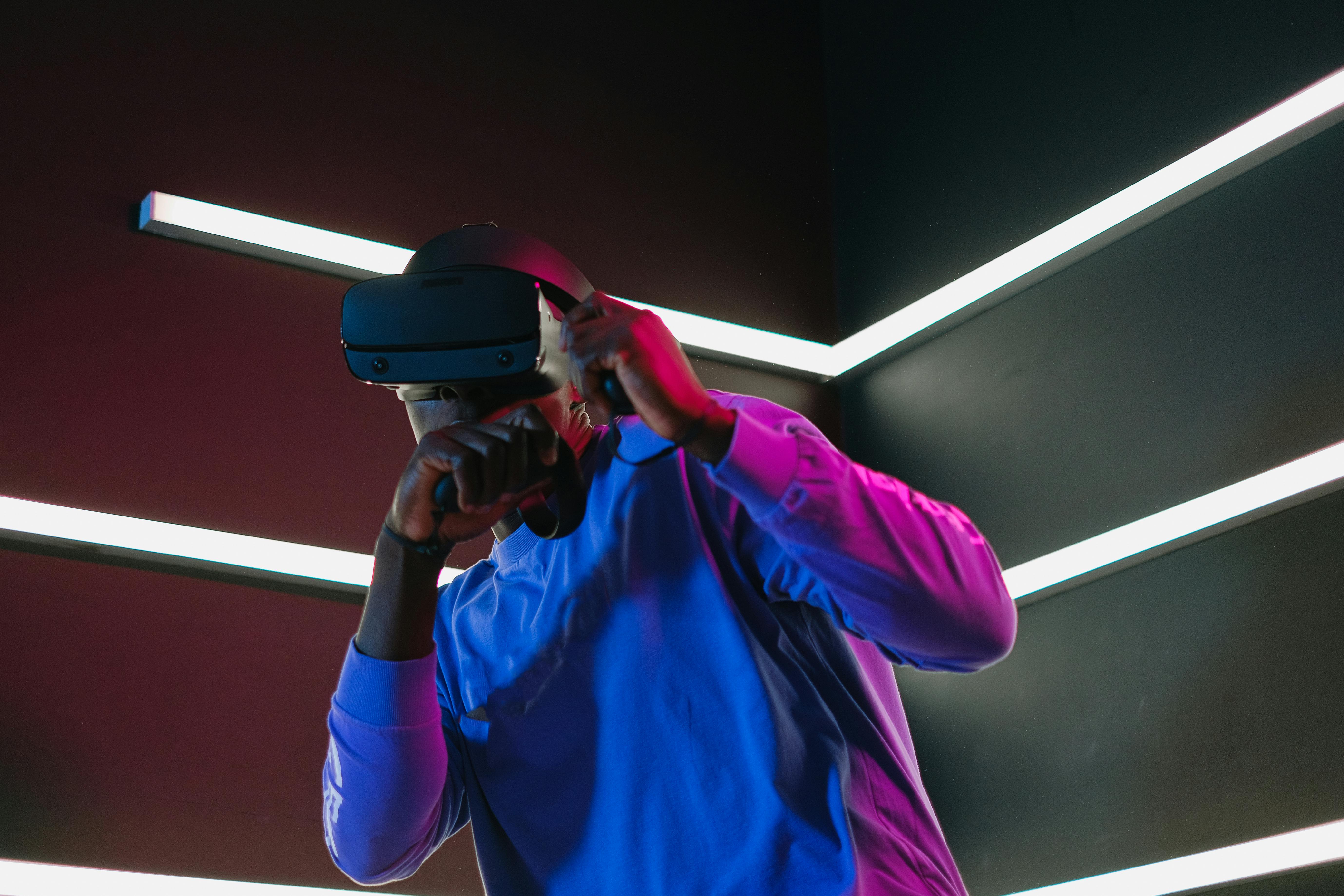
A serious game, or educational game, is an innovative learning method in which video games are transformed into educational tools. Far from being designed solely for entertainment, this type of game has the primary objective of training and educating its users.
Combining fun and education
In a serious game, entertainment is blended with learning. By using typical game elements such as interactive scenarios, challenges, reward systems, and level-based progression, serious games make learning more engaging and stimulating. This innovative educational approach helps capture users’ attention and maintain their motivation throughout the learning process.
Practice at the heart of the experience
Beyond engagement, serious games provide a practical framework where theory and action meet. Participants are confronted with simulations of real-life situations, requiring them to concretely apply the theoretical knowledge they have acquired. Whether managing a virtual company, solving environmental issues, or navigating complex crisis management scenarios, serious games help develop practical and decision-making skills in a playful context.
A tool suited to various fields
The application of serious games is not limited to a single field. They can be effectively used for training in sectors as diverse as healthcare, education, engineering, business management, or military training. By adapting the game’s content and objectives to a specific training context, serious games offer a flexible and personalized learning method.
The benefits of serious games
Using serious games in a professional environment brings a new dimension to training:
- Increased engagement: Thanks to the immersive game universe, serious games capture participants’ interest, increasing their motivation and involvement.
- Improved knowledge retention: Educational games place learners in practical and interactive contexts, encouraging better understanding and retention of information.
- Immediate performance feedback: Serious games provide direct and personalized feedback, allowing learners to quickly understand and improve their skills.
Escape games: the perfect serious game
As a serious game, the escape game stands out for its ability to adapt to different types of training, regardless of the objectives and themes addressed.
What are the benefits of training escape games?
- Flexible format: Whether on-site, online, or hybrid, the game can take place in various environments and formats. This is particularly useful for adapting to learners’ time and location constraints.
- Total learner immersion: The player is immersed in a rich universe that stimulates engagement and concentration. By taking on a role within a captivating story, each participant experiences the activity in a more intense and personal way. This immersion facilitates deeper assimilation of knowledge and skills.
- Customization based on targeted skills: Each escape game can be specifically designed to develop certain skills, depending on the specific needs of the company or industry.
- Performance analysis: Training escape games offer a practical method for assessing skills. Trainers can observe participant behavior in real time or through game data and provide targeted feedback.
How does an escape game adapt to different types of training?
- Leadership training: Places participants in decision-making situations involving resource management and team coordination.
- Technical training: Integrates puzzles that require the application of specific knowledge, turning theory into practice.
- Awareness training: Addresses important topics such as ecology, safety, or social issues through engaging scenarios, encouraging lasting awareness.
How to create a training escape game?
Developing an escape game for training requires careful attention to several key aspects:
- Define educational objectives: Games must be designed with clear and measurable objectives.
- What message should be conveyed?
- Who is the training intended for?
- Develop the scenario: The story must be engaging, coherent, and aligned with the training objectives.
- What environment do we want to simulate?
- What story best fits the objectives?
- Design puzzles and challenges: These should be both fun and aligned with the skills to be developed.
- What level of difficulty is desired?
- What knowledge should be tested?
- Test and refine: Test with a pilot group, gather feedback, and adjust accordingly.
At Rakura, we support you at every stage, from creation to deployment of your training escape game. For any inquiries, contact us at contact@rakura.fr.
Conclusion
In conclusion, serious games—and more specifically escape games—represent a revolution in corporate training. Thanks to their flexibility, their ability to immerse and engage participants, and their effectiveness in delivering both practical and theoretical skills, they have become an essential tool.
At Rakura, we are committed to providing tailored solutions for your training escape game needs. For impactful training and tangible results, escape games perfectly meet the demands of modern learning.